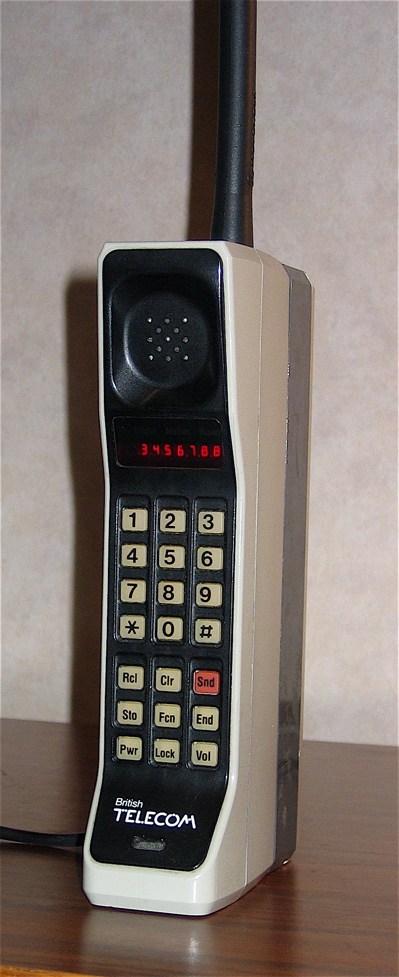
The first cell phone call ever made happened in 1973, on a random street corner in Manhattan. Martin Cooper, an engineer at Motorola, called up his rival at AT&T just to let him know Motorola beat them to it. The phone weighed 2.5 pounds and cost nearly $4,000 when it finally hit shelves ten years later. It was completely analog, and people were amazed by it.
That is crazy to think about! I get frustrated when YouTube buffers for two seconds!!
So what even is analog?
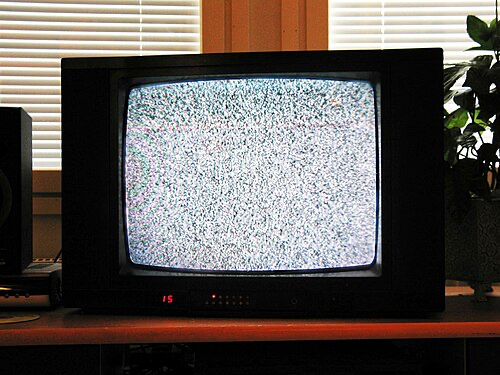
Analog signals are continuous. They flow like a wave. Old TV worked exactly like this – your antenna caught radio waves from a broadcast tower, and the further you were from that tower, the worse your picture got. But here’s the thing: it degraded gradually. You’d get snow, grain, a ghost image. You still had something. That forgiveness was actually a feature, even if nobody called it that.
The first cell phones were the same way. If you drove out of range on a call, the voice would crackle and fade out slowly. It didn’t just cut off clean. My cousin and I used to think it was black vs white ants fighting to the death.
Then 2009 happened.
For most of the 1900s, every TV, every satellite dish, every broadcast tower was speaking analog. Congress actually started planning the switch to digital back in 1996, giving stations a digital channel to run alongside their analog one. But the hard cutoff date was June 12, 2009. After that, full-power stations were done with analog for good.
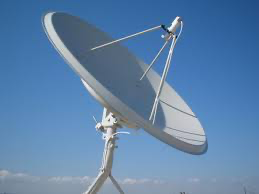
If you had a satellite dish before that date, it was pulling in and decoding an analog signal. After 2009, everything had to go digital. A lot of households weren’t ready. The government had to delay the original February deadline and mail out coupons for converter boxes because millions of people would have just lost TV entirely overnight.
Here’s what actually changed though.
Digital doesn’t flow. It’s ones and zeros, either the signal is strong enough to reconstruct a perfect picture or it isn’t strong enough at all. You’ve probably noticed this without realizing it — your stream freezes and pixelates for a second before recovering. That’s the digital cliff. With analog you got a bad picture. With digital you get nothing.
What you gain is clarity and consistency. What you lose is that gradual fade.
Honestly when I think about Cooper standing on that sidewalk in 1973, thrilled just to make a wireless call at all, and then think about how quickly we went from analog crackle to HD everything, it’s a little hard to process. The switch to digital didn’t happen because it felt more natural. It happened because discrete signals are cleaner, easier to copy, and harder to degrade. We traded warmth for precision.
I wonder if people really noticed it happened!
Grammar checked with Claude (claude-sonnet-4-6, Anthropic, May 2026, claude.ai/chat). Prompt: “Please check the following blog post for any grammar, spelling, and punctuation errors. Do not change the meaning, tone, or structure of the writing. Only fix errors.”
Sources
https://electronics.howstuffworks.com/cell-phone5.htm
https://www.fcc.gov/consumers/guides/digital-television
https://www.history.com/news/analog-to-digital-television-transition
Leave a Reply