Author: jamesadmin

  • AI Won a Nobel Prize. Now What?

    In 2024 the Nobel Prize in Chemistry went to researchers who built an AI that predicts the shape of proteins. That’s a problem biologists had been chipping away at for about 50 years. The shape of a protein determines what it does in your body and figuring it out used to take years of lab work for a single protein. Drug companies are already using it to design new medications. That same year the Nobel Prize in Physics went to the researchers whose work made neural networks possible.

    Two Nobels and AI is sitting in the middle of both of them. That’s worth paying attention to.

    Something that changed how I think about all of this is learning about how the brain actually processes reality. Your brain isn’t trying to give you an accurate picture of the world. It’s trying to keep you alive and those are completely different goals. We see color because it helped our ancestors figure out which food was safe to eat. Your brain fills in gaps in your vision constantly without you noticing, running on shortcuts and assumptions because they’re usually good enough, not because they’re accurate.

    A computer vision system doesn’t work anything like that. It just sees a grid of numbers. No shortcuts from millions of years of evolution, no instinct telling it what to pay attention to. It picks up on patterns a human would never catch but put a sticker on a stop sign and some of these systems won’t recognize it anymore. The way it fails looks nothing like the way a human fails.

    One of the Nobel winners said something pretty honest after winning. AI research is hitting a real data problem. These models need enormous amounts of training data and there’s only so much quality human generated content out there. Some researchers think models will start training on AI generated data which sounds like it could get weird pretty fast. Nobody has a clean answer for what comes next.

    Coming into this semester I thought digital just meant technology in some vague general sense. Going through everything from ancient writing systems to transistors to how a large language model actually generates text, it means something more specific now. Digital is about taking something from the real world and breaking it into discrete pieces so it can be stored and copied without falling apart. That same basic idea connects a Sumerian scribe pressing symbols into clay to the chips being built today.

    Nobody knows exactly where this is heading. But knowing how it works feels a lot better than not knowing.

    Grammar checked with Claude (claude-sonnet-4-6, Anthropic, May 2026, claude.ai/chat). Prompt: “Please check the following blog post for any grammar, spelling, and punctuation errors. Do not change the meaning, tone, or structure of the writing. Only fix errors.”

    Sources

    https://www.technologyreview.com/2024/10/09/1105335/google-deepmind-wins-joint-nobel-prize-in-chemistry-for-protein-prediction-ai/

    https://www.technologyreview.com/2024/10/15/1105533/a-data-bottleneck-is-holding-ai-science-back-says-new-nobel-winner/

    https://www.scientificamerican.com/article/ai-comes-to-the-nobels-double-win-sparks-debate-about-scientific-fields/

  • How ChatGPT Actually Works

    Everyone is using ChatGPT. Barely anyone knows what’s actually happening when they type something and hit enter. I didn’t either until this class broke it down and honestly it made me think about it completely differently.

    It’s not looking just things up or searching a database. It’s doing something much stranger than that.

    It starts with prediction.

    At its core a large language model like ChatGPT is a next word predictor. It was trained on an enormous amount of text from the internet, books, articles, code, conversations, and it learned the statistical relationships between words. When you type a prompt it calculates what word is most likely to come next, then what word comes after that, and keeps going until it produces a complete response.

    Such a weird thing to think about! Something that can hold a conversation and write code and summarize documents is, at its foundation, just really good at guessing the next word.

    Neural networks and gradient descent.

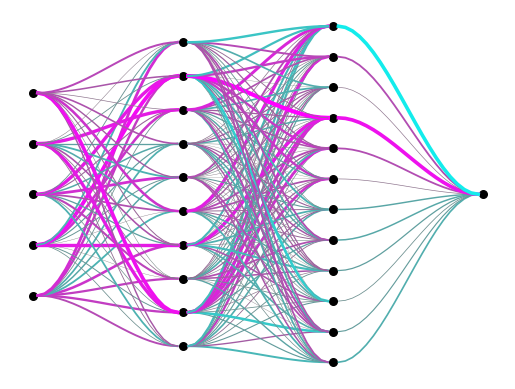
    ChatGPT is built on a neural network with billions of parameters. Think of parameters as dials. During training the network made predictions, checked whether they were right, measured how wrong it was, and then adjusted all those dials slightly in the direction that reduced the error. That process is called gradient descent.

    Backpropagation is how the error signal travels back through the network to figure out which dials need adjusting and by how much. Do this billions of times across hundreds of billions of words of text and something remarkable happens. The network doesn’t just learn to predict words. It develops internal representations of concepts, facts, relationships, even something that looks like reasoning. Nobody fully understands why. That’s the emergent property from the last post showing up again.

    What it can’t do.

    Here’s where it gets important especially if you’re thinking about using AI in a business context.

    ChatGPT has no memory between conversations unless you give it one. It has no access to real time information unless it’s connected to a search tool. It doesn’t know what it doesn’t know. It will confidently produce wrong answers because it’s optimizing for what sounds right based on patterns, not for what is actually true. I have experienced this repeatedly.

    Professor Cutting pointed this out directly on the syllabus. ChatGPT does a truly terrible job explaining the advantages and limitations of digital representation because it has no idea what was discussed in class. It can only pattern match to things it was trained on.

    This is a very useful thing to understand. The tool is powerful but it has a specific kind of blindness baked into how it works.

    The copyright issues are wild.

    One thing that came up in class that I keep thinking about is the idea that every possible melody has already been copyrighted and released into the public domain. The logic is that melodies are just combinations of notes and there are only so many of them. A programmer mathematically generated all possible short melodies and copyrighted them specifically to prevent anyone from being able to claim ownership over a melody in the future.

    ChatGPT trained on essentially all human generated text creates a similar question. If it learned to write by reading everything humans have written, who owns what it produces? That question is very much unsettled legally right now and it’s going to matter enormously to anyone building a business on top of these tools.

    Why this matters for entrepreneurs.

    The businesses being built on top of large language models right now are mostly wrapping a thin product layer around someone else’s model. That works for now but it’s not a strong position long term. The more interesting question is figuring out where AI actually produces reliable outputs and building real workflows around those specific things instead of just assuming it’ll figure everything out. The entrepreneurs who understand the limitations of the tool are going to make better decisions with it than the ones who just trust the output.

    Grammar checked with Claude (claude-sonnet-4-6, Anthropic, May 2026, claude.ai/chat). Prompt: “Please check the following blog post for any grammar, spelling, and punctuation errors. Do not change the meaning, tone, or structure of the writing. Only fix errors.”

    Sources
    https://www.youtube.com/watch?v=Ilg3gGewQ5U
    https://www.youtube.com/watch?v=uCIa6V4uF84

    https://www.youtube.com/watch?v=IHZwWFHWa-w

  • The Law That Built the Modern World

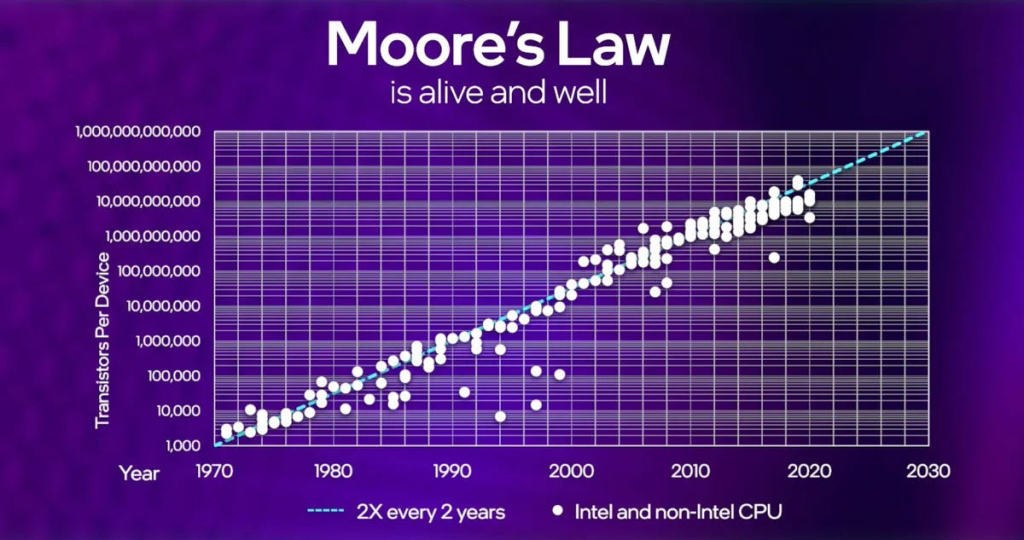
    In 1965 a man named Gordon Moore made a prediction. He noticed that the number of transistors engineers could fit onto a computer chip was doubling roughly every two years. He figured that would probably keep going. It did. For about 60 years.

    That observation became Moore’s Law and it’s arguably the most important economic force in the history of technology. Every time transistors got smaller, computers got faster and cheaper. Every time computers got faster and cheaper, new industries became possible. The internet, smartphones, streaming, social media, cloud computing, none of it happens without Moore’s Law quietly running in the background.

    As someone interested in entrepreneurship this is one of the most useful frameworks of knowledge and interpretation I’ve come across in this class.

    The numbers are genuinely hard to believe.

    The first transistor built at Bell Labs in 1947 was roughly the size of your hand. Today a single Apple M3 chip contains around 25 billion transistors in a piece of silicon smaller than a postage stamp. I have an M3. Absolutely insane to think about. NVIDIA’s new Blackwell GPU pushes that to 208 billion transistors on a single chip that costs around $40,000.

    To put that in perspective, if cars had improved at the same rate as transistors since 1971 a car today would go 300,000 miles per hour and cost less than a penny.

    The metric prefixes we use to talk about this stuff tell the story on their own. We went from kilobytes to megabytes to gigabytes to terabytes in a few decades. Your phone probably has 256 gigabytes of storage. A single gigabyte is a billion bytes. Each byte is 8 bits. Each bit is one transistor firing on or off. The scale is almost impossible to visualize.

    But the law is slowing down.

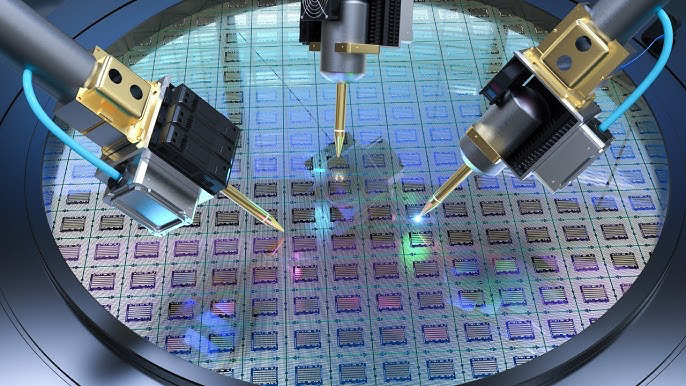
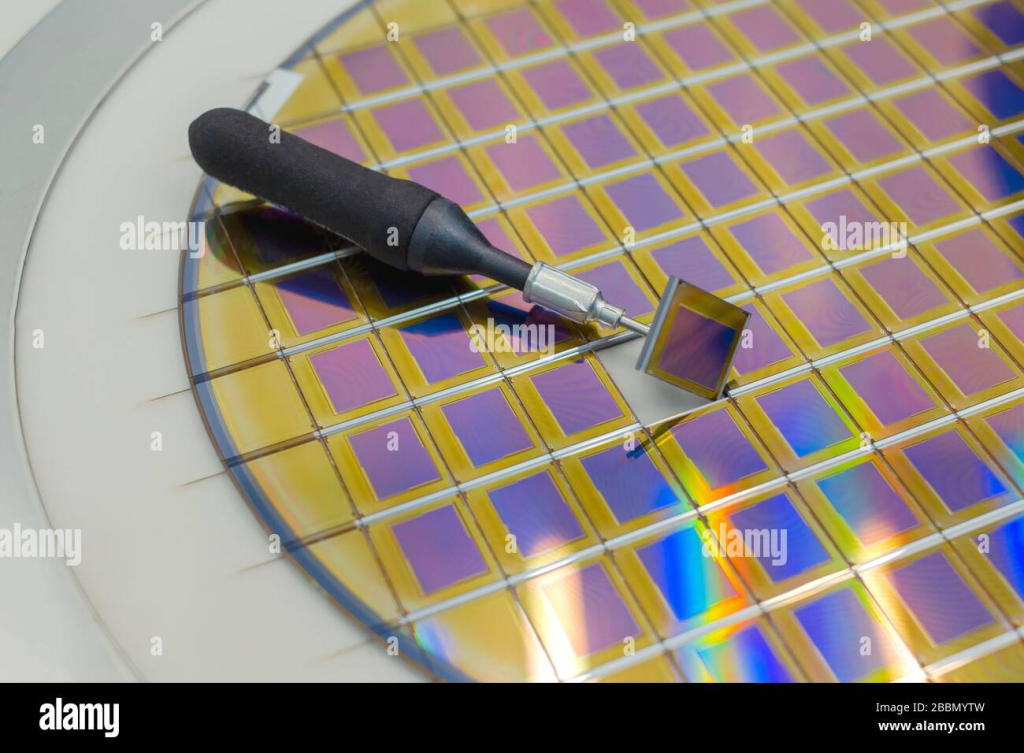
    We’re now building transistors just a few atoms wide. At that scale the normal rules of physics start to break. Electrons don’t behave the way they do at larger scales. Heat becomes a massive problem. The cost of building the facilities to manufacture these chips has become so enormous that only a handful of companies in the world can do it.

    Moore’s Law isn’t dead but it’s not what it was. The easy doublings are behind us.

    So what comes next?

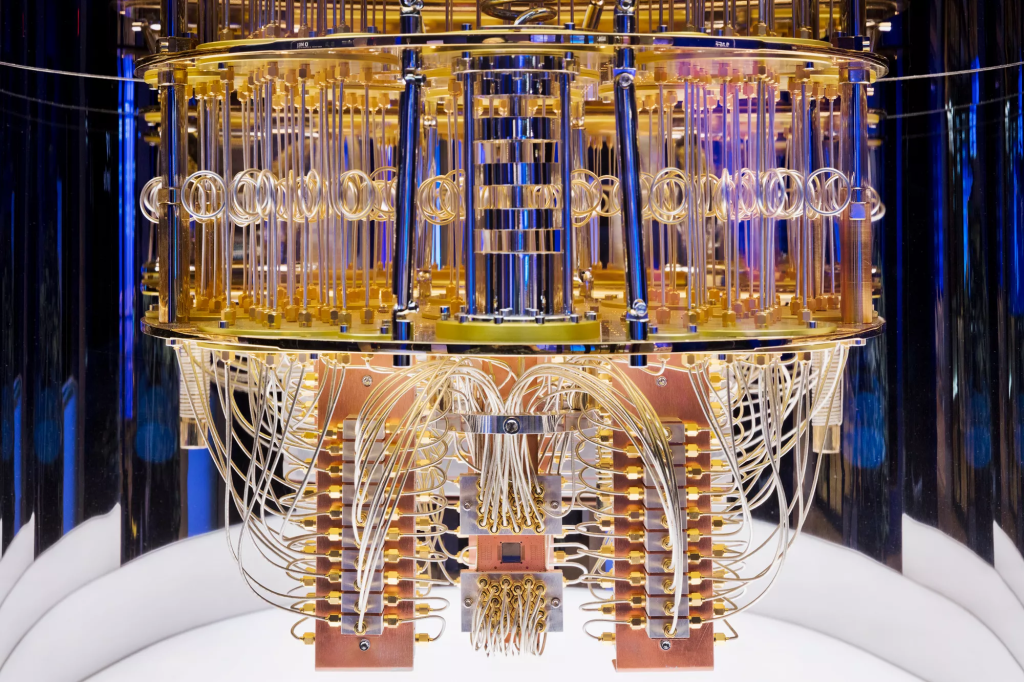
    A few different directions are being explored right now. Quantum computing uses the properties of subatomic particles to process information in ways classical computers fundamentally can’t. Photonic chips like those being developed by a company called Lightmatter use light instead of electricity to move data, which is faster and uses far less energy. Vaire Computing is working on chips that are nearly reversible at a physical level, meaning they lose almost no energy as heat.

    Physicist Michio Kaku thinks the next revolution is AI combined with quantum computing. He might be right. Nobody knows exactly what the next curve looks like.

    The entrepreneurship relationship is quite obvious here!

    Moore’s Law created predictable waves of opportunity. Every time computing power got cheaper a new category of business became possible that wasn’t before. The people who saw those waves coming and built at the right moment made fortunes. The people who waited too long got disrupted.

    Right now we’re at an inflection point. Classical silicon is hitting its limits. New computing paradigms are emerging. That gap between what’s ending and what’s beginning is exactly where the next generation of important companies will be built.

    The question worth asking isn’t what computers can do today. It’s what becomes possible when computing gets ten times cheaper and a hundred times faster again. Because if history is any guide, that’s coming. Just maybe not on the same schedule as before.

    Grammar checked with Claude (claude-sonnet-4-6, Anthropic, May 2026, claude.ai/chat). Prompt: “Please check the following blog post for any grammar, spelling, and punctuation errors. Do not change the meaning, tone, or structure of the writing. Only fix errors.”

    Sources

    https://www.investopedia.com/terms/m/mooreslaw.asp

    https://www.waferworld.com/post/how-small-can-transistors-get

    https://en.wikipedia.org/wiki/Transistor_count
    https://www.youtube.com/watch?v=2CijJaNEh_Q

    https://www.youtube.com/watch?v=9XK-fBkWsvs

  • The First Computer Was Built 2,000 Years Ago

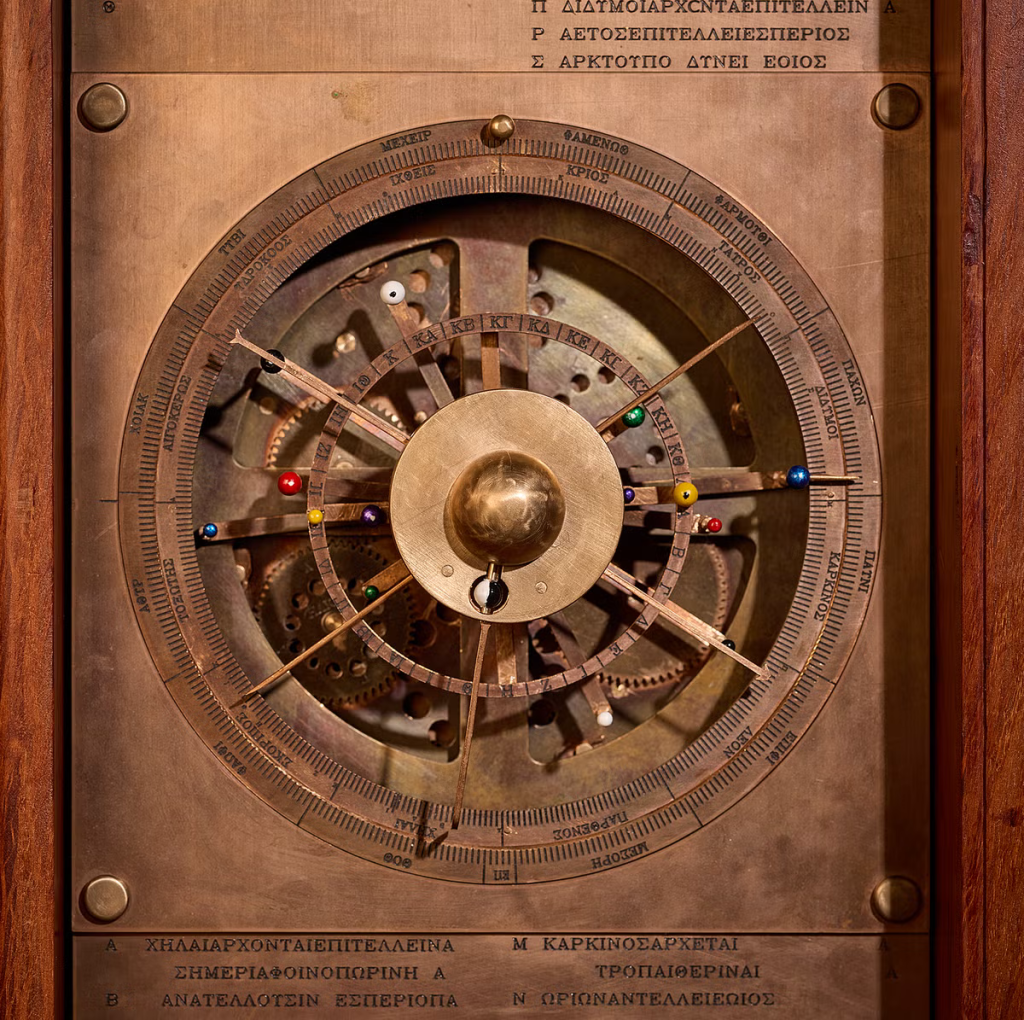
    Most people think the history of computing starts somewhere in the 1940s. A room full of vacuum tubes, a few guys in lab coats, the birth of the modern computer. At least, I did! But there’s an object sitting in a museum in Athens right now that suggests humans have been building computing machines for a lot longer than that.

    It’s called the Antikythera mechanism. It was pulled from a shipwreck off the coast of a Greek island in 1901 and for decades nobody really knew what it was. Eventually researchers figured it out. It’s a mechanical computer. Built around 100 BC. It could predict solar eclipses, track the positions of planets, and calculate the dates of the Olympic Games. All with gears and bronze and no electricity whatsoever. I remember being extremely fascinated watching a documentary about this. How could it be possible?

    Blows my mind every time I think about it.

    What even is a computer?

    This is a question worth sitting with. Because if a bronze gear mechanism from ancient Greece can predict astronomical events with decent accuracy, is that so different from what we do today? The inputs go in, the machine processes them according to rules built into its structure, and an output comes out.

    That’s all a computer is. A rule following machine. The rules just happen to be written in transistors and binary code now instead of interlocking bronze gears.

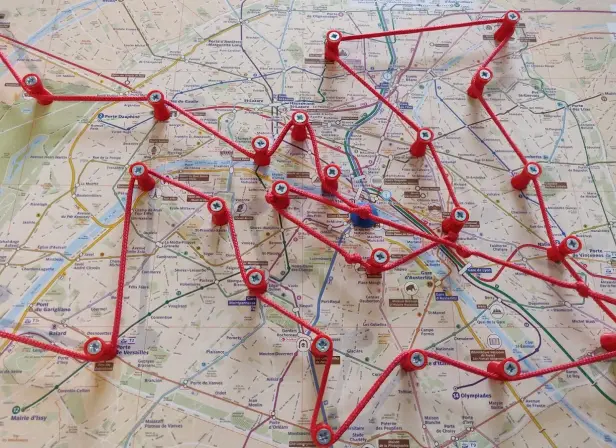
    The Traveling Salesman Problem is a good way to see this. The problem is simple to describe. A salesman needs to visit a bunch of cities and return home. What’s the shortest possible route? Sounds easy. But as you add more cities the number of possible routes explodes so fast that even modern computers can’t solve it perfectly for large numbers of cities. They can get close but not exact.

    There’s no clean digital solution to every problem. Sometimes the best a computer can do is a very good guess.

    Go is another example.

    Go is a board game that’s been played in Asia for over 2,500 years. The rules are simple. The strategy is so deep that the best players in the world describe it as closer to art than math. For decades AI couldn’t beat top human players. Chess fell to computers in 1997. Go held out until 2016 when Google’s AlphaGo finally won. I absolutely loved learning about this in class.

    The reason Go was so much harder isn’t just the number of possible moves, it’s that the game requires something that looks a lot like intuition. Positional judgment. A feel for the board that humans develop over years of play. AlphaGo didn’t learn the game the way a human does. It played millions of games against itself until patterns emerged that even its creators couldn’t fully explain.

    That makes it extremely weird to think about. A machine that learned something its makers don’t completely understand.

    The thread from Athens to AlphaGo.

    What connects the Antikythera mechanism to AlphaGo to your laptop is the same basic idea. Humans have always wanted to build things that can process information and produce useful outputs faster and more reliably than we can do it in our heads. We’ve been at this for at least 2,000 years.

    The tools have gotten unimaginably more powerful. But the impulse is the same one that made some anonymous Greek engineer sit down and figure out how to model the solar system in bronze.

    I find that kind of reassuring honestly. We’ve always been builders. We’ve always been trying to extend what our minds can do. The digital revolution isn’t a departure from human history. It’s just the latest chapter.

    Grammar checked with Claude (claude-sonnet-4-6, Anthropic, May 2026, claude.ai/chat). Prompt: “Please check the following blog post for any grammar, spelling, and punctuation errors. Do not change the meaning, tone, or structure of the writing. Only fix errors.”

    Sources

    https://www.w3schools.com/dsa/dsa_ref_traveling_salesman.php

    https://www.britannica.com/technology/Antikythera-mechanism
    https://www.youtube.com/watch?v=ay6z_vXZzX8
    https://www.youtube.com/watch?v=qqlJ50zDgeA

  • Your Brain Is Not a Computer

    It’s not your brain’s job to see the world accurately. Its job is to keep you alive. Those are two very different things.

    Think about that for a second – everything you see, hear, and feel is your brain making its best guess based on incomplete information. It fills in gaps, ignores things it thinks are irrelevant, and constructs a version of reality that’s useful, not necessarily true. But apparently, that’s kind of the whole point?

    So when people say AI thinks like a human brain, I think they’re missing something pretty important.

    What a neural network actually does.

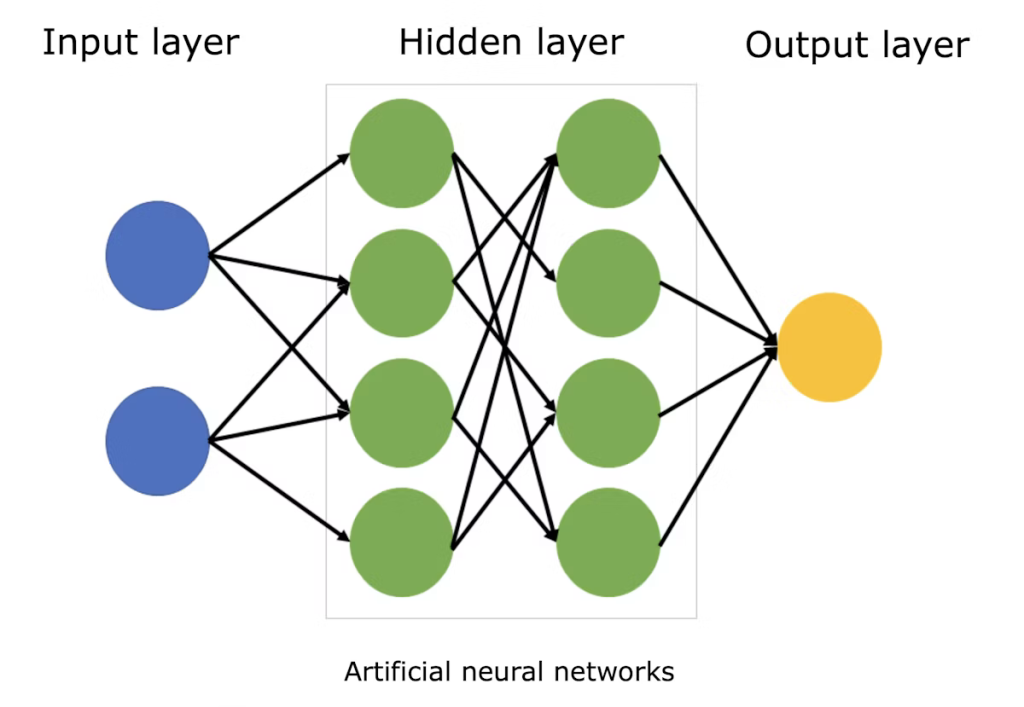
    A neural network is loosely inspired by the brain. You have layers of nodes, each one connected to the next, and data flows through them. The network adjusts the strength of those connections based on whether it gets the right answer or not. That process is called gradient descent and backpropagation. Essentially the network figures out where it went wrong and nudges itself in the right direction. Over millions of examples it gets really good at pattern recognition.

    Pretty impressive!

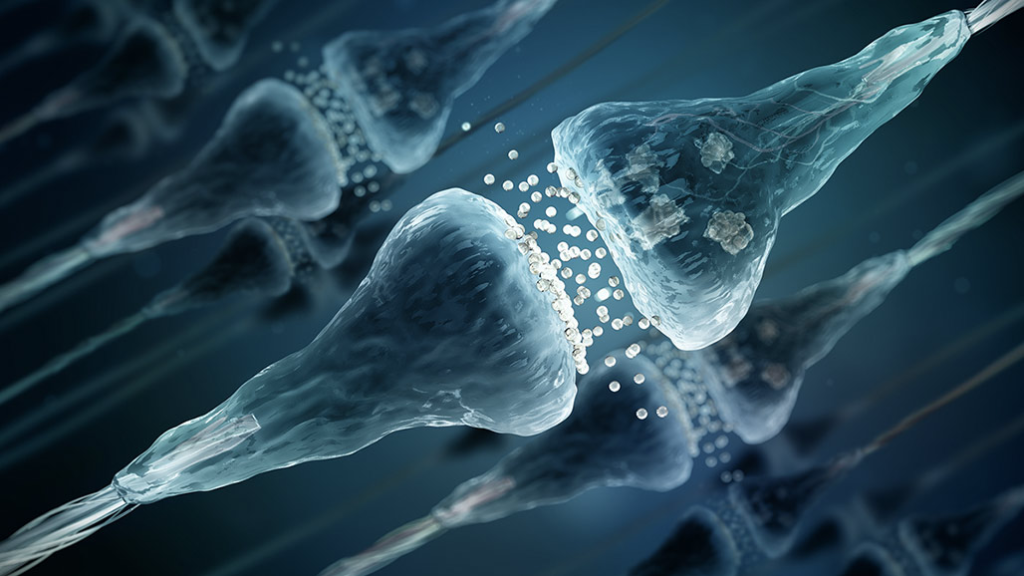
    Your brain does something fundamentally different. Neurons don’t just pass signals forward. They loop back on each other, they fire in patterns, they rewire themselves based on experience. You have more neural connections in your brain than there are stars in the Milky Way. And out of all that complexity something emerges that we don’t fully understand yet. Consciousness. Intuition. Theory of mind, which is the ability to understand that other people have thoughts and feelings different from your own.

    No AI has gotten there yet.

    Emergent property is probably the most important concept here.

    Emergent property means something arises from a system that you couldn’t predict just by looking at the individual parts. Water is wet but a single water molecule isn’t wet. Traffic jams emerge from individual drivers making individual decisions. Consciousness might emerge from billions of neurons firing together in the right way.

    The reason Go was so hard for AI to crack wasn’t just because the game has more possible positions than atoms in the observable universe. It was because the best human Go players describe making moves based on feel. Intuition. Something that emerges from years of experience in a way they can’t fully explain. That’s not something you can just optimize your way into.

    What this means in business?

    AI is an incredibly powerful tool. It can process data faster than any human, find patterns in noise, automate repetitive decisions. As an entrepreneur you’d be crazy not to use it.

    But the things that actually build a great company, reading a room, earning trust, knowing when a deal feels off, understanding what a customer actually wants versus what they say they want, those are deeply human. They come from theory of mind. From emotional intelligence. From the kind of intuition that emerges from real experience in the world.

    AI can tell you what happened. It takes a person to interpret and understand why it matters.

    Grammar checked with Claude (claude-sonnet-4-6, Anthropic, May 2026, claude.ai/chat). Prompt: “Please check the following blog post for any grammar, spelling, and punctuation errors. Do not change the meaning, tone, or structure of the writing. Only fix errors.”

    Sources
    https://www.youtube.com/watch?v=I6PC8f8GRtU
    https://www.youtube.com/watch?v=HU6LfXNeQM4
    https://www.youtube.com/watch?v=aircAruvnKk
    https://www.youtube.com/watch?v=uXwCHbhdeko
    https://www.youtube.com/watch?v=IHZwWFHWa-w
    https://www.youtube.com/watch?v=Ilg3gGewQ5U

  • Why Your Computer Only Knows Two Things

    Everything your computer has ever done, every email, every video, every game, comes down to one thing. Either on or off – or one or zero.

    It sounds almost too simple to be real, but that’s the foundation everything is built on. And once you understand why, the whole digital world starts to make a lot more sense.

    It starts with the transistor.

    A transistor is basically a tiny switch. It can be on or it can be off. The first ones were built in the late 1940s and were about the size of your palm. Today your iPhone has around 16 billion of them packed into a chip the size of a thumbnail.

    When you line up enough of these switches and wire them together in specific patterns, you get something called logic gates. Logic gates take inputs and produce outputs based on simple rules. An AND gate only outputs a 1 if both inputs are 1. An OR gate outputs a 1 if either input is 1. Stack enough of these gates together and suddenly you can add numbers, store memory, run software. All from switches flipping on and off billions of times per second.

    So why binary? Why not three states or ten?

    Because on and off is the most reliable thing electricity can do. A signal is either there or it isn’t. The moment you try to distinguish between ten different voltage levels instead of two, things get messy and errors creep in. Binary is stable. It’s forgiving. It’s the reason your computer doesn’t randomly corrupt data every few minutes.

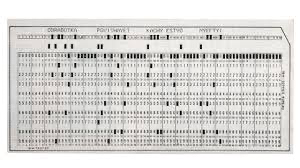
    Before transistors, computers used punch cards. IBM punch card machines in the mid 1900s stored data by physically punching holes in paper cards. A hole meant one thing, no hole meant another. Still binary, just a lot slower and a lot more paper.

    The business angle is pretty interesting.

    In 1965 a man named Gordon Moore noticed that the number of transistors you could fit on a chip was doubling roughly every two years while the cost kept dropping. That observation became Moore’s Law and it held up for decades. It’s basically the reason a smartphone today is more powerful than a room sized computer from the 1970s.

    Every startup that’s ever been built on software, every app, every platform, every digital business exists because transistors kept getting smaller and cheaper right on schedule. The timing of when you start a company in tech isn’t random. It’s tied directly to where we are on that curve.

    We’re now at a point where transistors are just a few atoms wide. The physics of making them smaller is starting to break down. Companies like Vaire Computing are experimenting with energy efficient chips that work differently at a fundamental level. Others are exploring photonic chips that use light instead of electricity. The next curve is coming. Nobody knows exactly what it looks like yet.

    Grammar checked with Claude (claude-sonnet-4-6, Anthropic, May 2026, claude.ai/chat). Prompt: “Please check the following blog post for any grammar, spelling, and punctuation errors. Do not change the meaning, tone, or structure of the writing. Only fix errors.”


    Sources
    https://www.youtube.com/watch?v=Xpk67YzOn5w

    https://online.visual-paradigm.com/knowledge/engineering/what-is-logic-diagram-and-truth-table

    https://www.investopedia.com/terms/m/mooreslaw.asp

    https://www.waferworld.com/post/how-small-can-transistors-get

    https://en.wikipedia.org/wiki/Transistor_count

    https://lemire.me/blog/2023/10/18/how-many-billions-of-transistors-in-your-iphone-processor/

  • The Day the Signal Changed

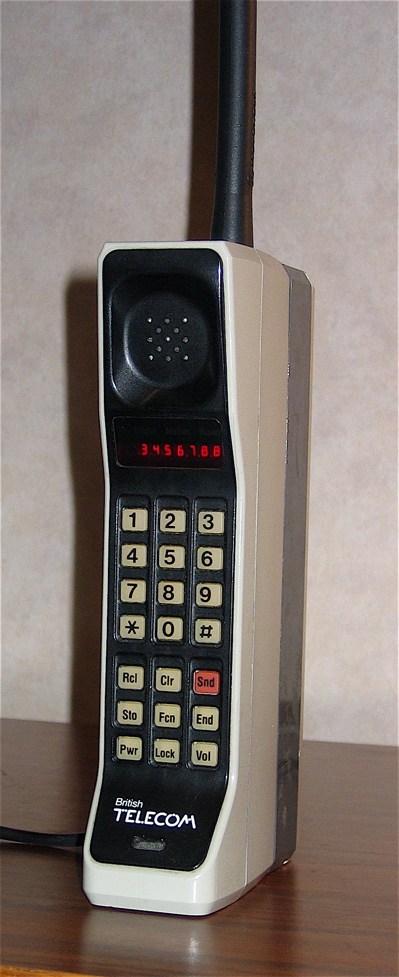
    The first cell phone call ever made happened in 1973, on a random street corner in Manhattan. Martin Cooper, an engineer at Motorola, called up his rival at AT&T just to let him know Motorola beat them to it. The phone weighed 2.5 pounds and cost nearly $4,000 when it finally hit shelves ten years later. It was completely analog, and people were amazed by it.

    That is crazy to think about! I get frustrated when YouTube buffers for two seconds!!

    So what even is analog?

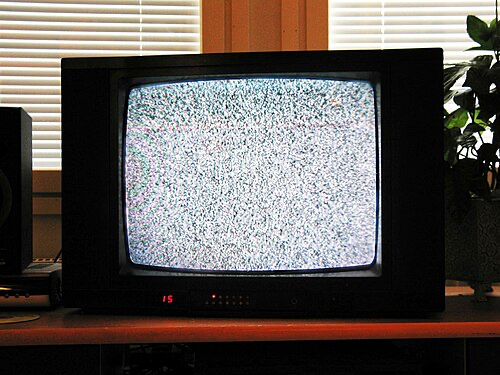
    Analog signals are continuous. They flow like a wave. Old TV worked exactly like this – your antenna caught radio waves from a broadcast tower, and the further you were from that tower, the worse your picture got. But here’s the thing: it degraded gradually. You’d get snow, grain, a ghost image. You still had something. That forgiveness was actually a feature, even if nobody called it that.

    The first cell phones were the same way. If you drove out of range on a call, the voice would crackle and fade out slowly. It didn’t just cut off clean. My cousin and I used to think it was black vs white ants fighting to the death.

    Then 2009 happened.

    For most of the 1900s, every TV, every satellite dish, every broadcast tower was speaking analog. Congress actually started planning the switch to digital back in 1996, giving stations a digital channel to run alongside their analog one. But the hard cutoff date was June 12, 2009. After that, full-power stations were done with analog for good.

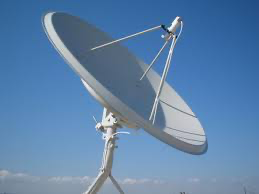
    If you had a satellite dish before that date, it was pulling in and decoding an analog signal. After 2009, everything had to go digital. A lot of households weren’t ready. The government had to delay the original February deadline and mail out coupons for converter boxes because millions of people would have just lost TV entirely overnight.

    Here’s what actually changed though.

    Digital doesn’t flow. It’s ones and zeros, either the signal is strong enough to reconstruct a perfect picture or it isn’t strong enough at all. You’ve probably noticed this without realizing it — your stream freezes and pixelates for a second before recovering. That’s the digital cliff. With analog you got a bad picture. With digital you get nothing.

    What you gain is clarity and consistency. What you lose is that gradual fade.

    Honestly when I think about Cooper standing on that sidewalk in 1973, thrilled just to make a wireless call at all, and then think about how quickly we went from analog crackle to HD everything, it’s a little hard to process. The switch to digital didn’t happen because it felt more natural. It happened because discrete signals are cleaner, easier to copy, and harder to degrade. We traded warmth for precision.

    I wonder if people really noticed it happened!

    Grammar checked with Claude (claude-sonnet-4-6, Anthropic, May 2026, claude.ai/chat). Prompt: “Please check the following blog post for any grammar, spelling, and punctuation errors. Do not change the meaning, tone, or structure of the writing. Only fix errors.”


    Sources
    https://electronics.howstuffworks.com/cell-phone5.htm

    https://www.fcc.gov/consumers/guides/digital-television

    https://www.history.com/news/analog-to-digital-television-transition

  • Before the Internet, There Was a Wire

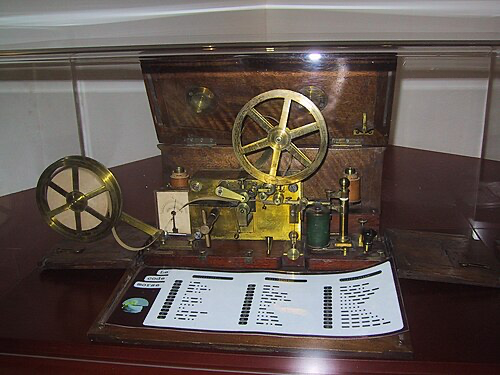
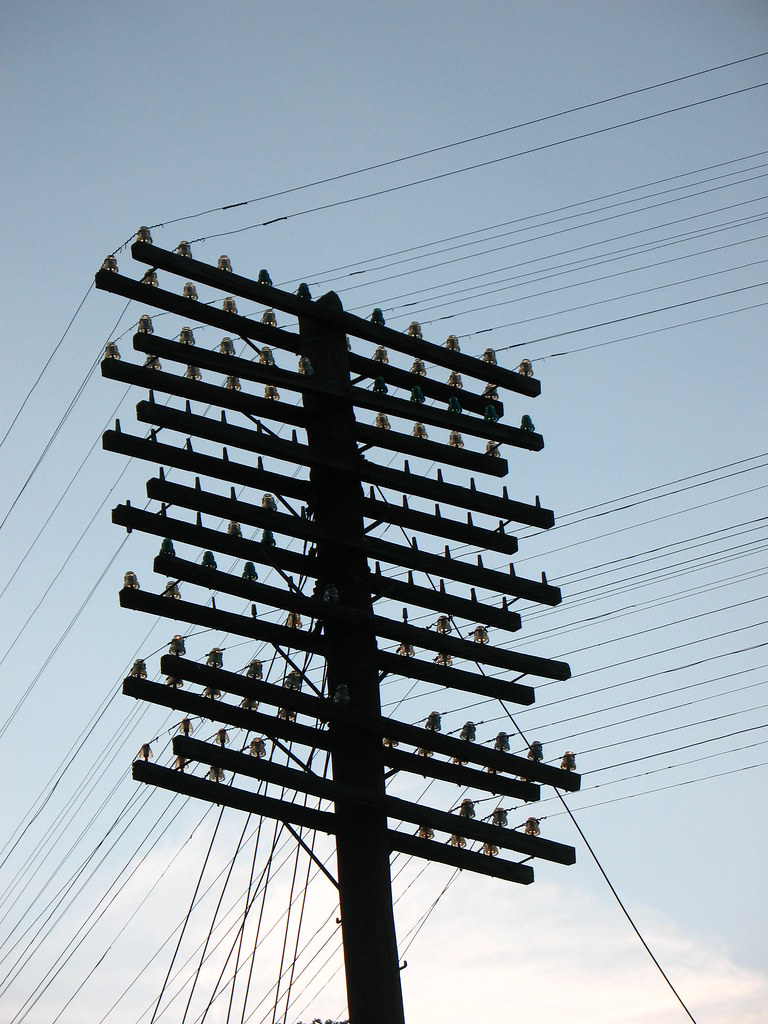
    In 1837, Samuel Morse and Alfred Vail figured out you could send a message hundreds of miles almost instantly by running an electrical pulse through a wire. No horse, no courier, no waiting days. Just a click and it was there.

    That was the telegraph. And for about 150 years it was the fastest way humans had ever communicated with each other.

    I think about that a lot when my texts don’t go through right away and I get annoyed. The bar was lower not that long ago.

    What made it revolutionary wasn’t just the speed. It was the encoding.

    To send a message over a wire, you couldn’t just talk into it. You had to convert language into something a wire could actually carry. That’s where Morse Code came in. Every letter got assigned a pattern of short and long electrical pulses, dots and dashes. String the right ones together and you had a word. String enough words and you had a message.

    That’s basically what all digital communication still does today. Instead of dots and dashes, we use ones and zeros. The concept is the same: take something natural, convert it into a discrete code, send it, and decode it on the other end. The telegraph was, in a real sense, one of the first digital communication systems ever built.

    But before any of that could work, someone had to understand sound.

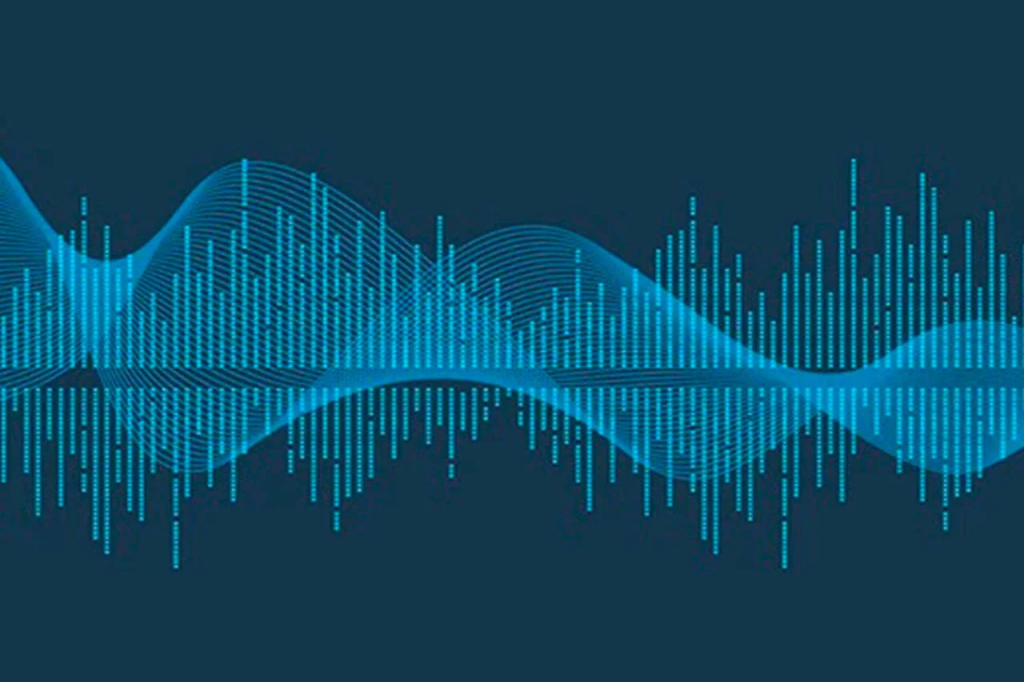
    Sound is a wave. When you clap your hands you’re pushing air molecules together, which bump the next ones, all the way to someone’s ear. It’s a pressure wave moving through space. The harder you clap, the more energy, the louder it sounds. The faster those waves repeat, the higher the pitch.

    A sound wave is completely analog. It flows continuously. It’s smooth and physical and real.

    So when people in the 1800s wanted to transmit a voice electrically they had a problem. A wire can carry a continuously varying electrical signal that mirrors a sound wave. That’s how early telephones worked, analog all the way through.

    The telegraph skipped the voice entirely. Instead of trying to encode the wave itself, Morse and Vail just encoded the meaning of the message in a pattern of on/off pulses. Discrete. Countable. More digital than analog.

    Guess what? That trade off still exists today!

    When you record yourself talking, your microphone picks up a continuous analog sound wave. But the moment it gets stored or sent anywhere, it gets sampled thousands of times per second and converted into numbers. The wave gets sliced into tiny pieces and each piece gets a value.

    What you gain is that those numbers can travel anywhere, get copied perfectly, and be rebuilt on the other end without degrading. What you lose is some of the original smoothness of the wave. Every digitized recording is technically an approximation of the real thing.

    The telegraph operators in the 1800s probably didn’t think about it that way. They just knew that dots and dashes got the message there. But they were doing the same thing we do now, translating the messy analog world into something a machine could handle.

    Grammar checked with Claude (claude-sonnet-4-6, Anthropic, May 2026, claude.ai/chat). Prompt: “Please check the following blog post for any grammar, spelling, and punctuation errors. Do not change the meaning, tone, or structure of the writing. Only fix errors.”

    Sources

    https://www.britannica.com/biography/Samuel-F-B-Morse

    https://www.britannica.com/technology/telegraph

    https://www.physicsclassroom.com/class/sound/Lesson-1/What-is-a-Sound-Wave

  • Hello world!

    Welcome to WordPress. This is your first post. Edit or delete it, then start writing!