Everything your computer has ever done, every email, every video, every game, comes down to one thing. Either on or off – or one or zero.
It sounds almost too simple to be real, but that’s the foundation everything is built on. And once you understand why, the whole digital world starts to make a lot more sense.
It starts with the transistor.
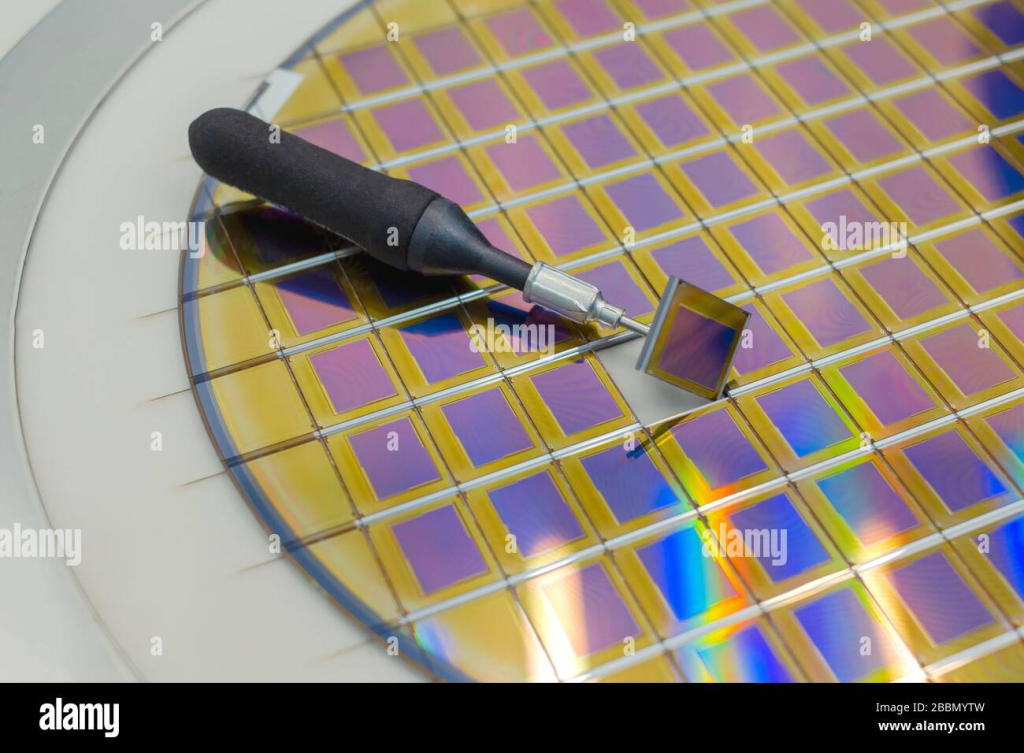
A transistor is basically a tiny switch. It can be on or it can be off. The first ones were built in the late 1940s and were about the size of your palm. Today your iPhone has around 16 billion of them packed into a chip the size of a thumbnail.
When you line up enough of these switches and wire them together in specific patterns, you get something called logic gates. Logic gates take inputs and produce outputs based on simple rules. An AND gate only outputs a 1 if both inputs are 1. An OR gate outputs a 1 if either input is 1. Stack enough of these gates together and suddenly you can add numbers, store memory, run software. All from switches flipping on and off billions of times per second.

So why binary? Why not three states or ten?
Because on and off is the most reliable thing electricity can do. A signal is either there or it isn’t. The moment you try to distinguish between ten different voltage levels instead of two, things get messy and errors creep in. Binary is stable. It’s forgiving. It’s the reason your computer doesn’t randomly corrupt data every few minutes.
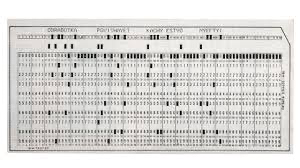
Before transistors, computers used punch cards. IBM punch card machines in the mid 1900s stored data by physically punching holes in paper cards. A hole meant one thing, no hole meant another. Still binary, just a lot slower and a lot more paper.
The business angle is pretty interesting.
In 1965 a man named Gordon Moore noticed that the number of transistors you could fit on a chip was doubling roughly every two years while the cost kept dropping. That observation became Moore’s Law and it held up for decades. It’s basically the reason a smartphone today is more powerful than a room sized computer from the 1970s.
Every startup that’s ever been built on software, every app, every platform, every digital business exists because transistors kept getting smaller and cheaper right on schedule. The timing of when you start a company in tech isn’t random. It’s tied directly to where we are on that curve.
We’re now at a point where transistors are just a few atoms wide. The physics of making them smaller is starting to break down. Companies like Vaire Computing are experimenting with energy efficient chips that work differently at a fundamental level. Others are exploring photonic chips that use light instead of electricity. The next curve is coming. Nobody knows exactly what it looks like yet.
Grammar checked with Claude (claude-sonnet-4-6, Anthropic, May 2026, claude.ai/chat). Prompt: “Please check the following blog post for any grammar, spelling, and punctuation errors. Do not change the meaning, tone, or structure of the writing. Only fix errors.”
Sources
https://www.youtube.com/watch?v=Xpk67YzOn5w
https://online.visual-paradigm.com/knowledge/engineering/what-is-logic-diagram-and-truth-table
https://www.investopedia.com/terms/m/mooreslaw.asp
https://www.waferworld.com/post/how-small-can-transistors-get
https://en.wikipedia.org/wiki/Transistor_count
https://lemire.me/blog/2023/10/18/how-many-billions-of-transistors-in-your-iphone-processor/
Leave a Reply