In 1837, Samuel Morse and Alfred Vail figured out you could send a message hundreds of miles almost instantly by running an electrical pulse through a wire. No horse, no courier, no waiting days. Just a click and it was there.
That was the telegraph. And for about 150 years it was the fastest way humans had ever communicated with each other.
I think about that a lot when my texts don’t go through right away and I get annoyed. The bar was lower not that long ago.
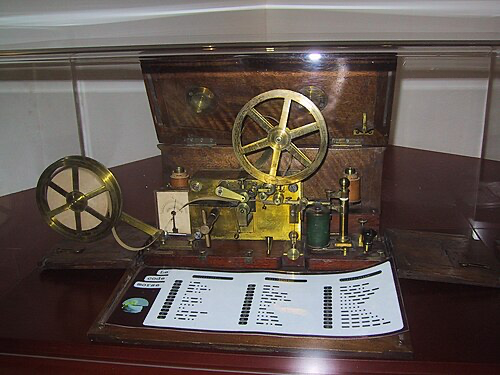
What made it revolutionary wasn’t just the speed. It was the encoding.
To send a message over a wire, you couldn’t just talk into it. You had to convert language into something a wire could actually carry. That’s where Morse Code came in. Every letter got assigned a pattern of short and long electrical pulses, dots and dashes. String the right ones together and you had a word. String enough words and you had a message.
That’s basically what all digital communication still does today. Instead of dots and dashes, we use ones and zeros. The concept is the same: take something natural, convert it into a discrete code, send it, and decode it on the other end. The telegraph was, in a real sense, one of the first digital communication systems ever built.
But before any of that could work, someone had to understand sound.
Sound is a wave. When you clap your hands you’re pushing air molecules together, which bump the next ones, all the way to someone’s ear. It’s a pressure wave moving through space. The harder you clap, the more energy, the louder it sounds. The faster those waves repeat, the higher the pitch.
A sound wave is completely analog. It flows continuously. It’s smooth and physical and real.
So when people in the 1800s wanted to transmit a voice electrically they had a problem. A wire can carry a continuously varying electrical signal that mirrors a sound wave. That’s how early telephones worked, analog all the way through.
The telegraph skipped the voice entirely. Instead of trying to encode the wave itself, Morse and Vail just encoded the meaning of the message in a pattern of on/off pulses. Discrete. Countable. More digital than analog.
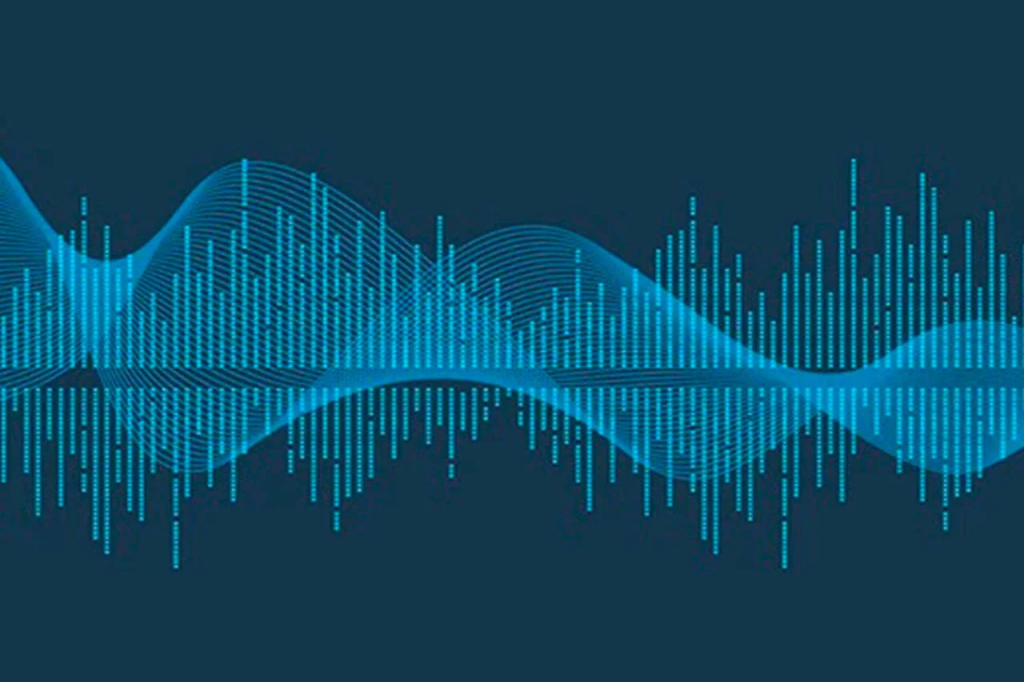
Guess what? That trade off still exists today!
When you record yourself talking, your microphone picks up a continuous analog sound wave. But the moment it gets stored or sent anywhere, it gets sampled thousands of times per second and converted into numbers. The wave gets sliced into tiny pieces and each piece gets a value.
What you gain is that those numbers can travel anywhere, get copied perfectly, and be rebuilt on the other end without degrading. What you lose is some of the original smoothness of the wave. Every digitized recording is technically an approximation of the real thing.
The telegraph operators in the 1800s probably didn’t think about it that way. They just knew that dots and dashes got the message there. But they were doing the same thing we do now, translating the messy analog world into something a machine could handle.
Grammar checked with Claude (claude-sonnet-4-6, Anthropic, May 2026, claude.ai/chat). Prompt: “Please check the following blog post for any grammar, spelling, and punctuation errors. Do not change the meaning, tone, or structure of the writing. Only fix errors.”
Sources
https://www.britannica.com/biography/Samuel-F-B-Morse
https://www.britannica.com/technology/telegraph
https://www.physicsclassroom.com/class/sound/Lesson-1/What-is-a-Sound-Wave
Leave a Reply